Obesity in Kuwait: Rates, Causes, and Medical Treatments
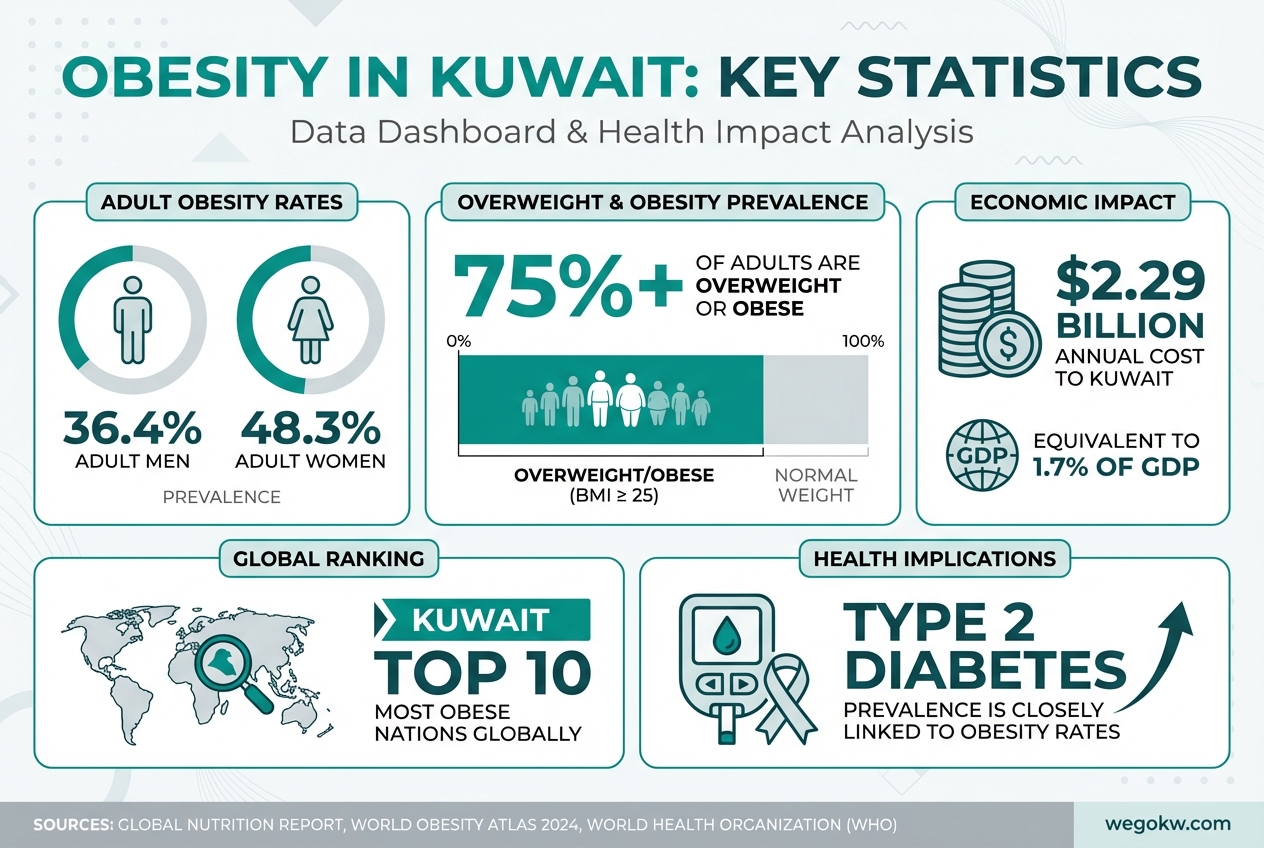
Kuwait has one of the highest obesity rates in the world. About 45 out of 100 adults here live with obesity, placing the country tenth globally [gulf_news_obesity]. If you are looking into medical weight loss options, you are far from alone.
Between the intense summer heat that keeps us indoors for half the year and a culture deeply centered around food and family gatherings, managing weight in Kuwait (السمنة في الكويت) is uniquely challenging. For years, the main medical answer was surgery. Kuwait actually performs more bariatric procedures per capita than any other nation on earth. Today, however, injectable medications like Wegovy offer a completely different approach.
The choice usually comes down to two main paths: bariatric surgery or GLP-1 medications. Both are highly effective, but they work in very different ways. Let's look at the actual clinical data so you can understand what to expect from each.
Just how common is obesity in Kuwait?
The short answer is: very common. Current data shows that 48.3% of adult women and 36.4% of adult men in Kuwait are living with obesity [global_nutrition_report].
This isn't just a cosmetic issue. The economic and healthcare impact is massive. In 2019, the cost of treating weight-related health conditions in Kuwait reached an estimated US$2.29 billion [world_obesity_observatory]. That covers the treatment of type 2 diabetes, high blood pressure, sleep apnea, and joint problems that often accompany excess weight.
The environment plays a massive role. When summer temperatures regularly exceed 45°C, outdoor physical activity becomes dangerous or impossible for months at a time. We rely heavily on cars, and our cities are built for driving rather than walking. Combine this with easy access to high-calorie foods and late-night dining habits, and the high body mass index (BMI) rates make complete sense.
Bariatric surgery vs. Wegovy: Weighing your options
If diet and exercise haven't worked, you might be considering medical help. Both surgery and Wegovy are readily available in Kuwait. Surgery is free for citizens at government hospitals, while private clinics charge between KWD 2,000 and KWD 5,000. Wegovy is available at local pharmacies, with the 2.4 mg maintenance dose costing 94.750 KWD per month (starting doses begin at 39.480 KWD).
Here is how the two approaches actually compare when we look at the numbers.
Weight loss outcomes: Surgery drops more weight
Bariatric surgery delivers roughly double the weight loss of Wegovy. Verified data from medical guidelines shows a clear hierarchy in how much weight people lose and keep off.
Gastric bypass creates a small pouch from your upper stomach and connects it directly to your intestine. People typically lose 30% to 35% of their total body weight within the first year [asmbs_fact_sheet].
Sleeve gastrectomy is the most popular option globally, accounting for about 60.4% of all weight loss surgeries. The surgeon permanently removes 75% to 80% of your stomach, leaving a narrow tube. Patients usually lose 25% to 30% of their total body weight [sleevepass_trial].
Wegovy (semaglutide) works differently. It mimics a hormone in your body to make you feel full. In the major STEP 1 clinical trial, people taking Wegovy lost an average of 14.9% of their body weight over 68 weeks [step1_nejm]. A longer two-year study, STEP 5, showed people maintained a 15.2% weight loss as long as they stayed on the medication [step5_nature].
In the real world, the gap between surgery and medication is often wider. While trial patients on Wegovy lose about 15%, real-world data shows many people lose closer to 5% to 10%. Why? Because over half of patients stop taking the medication within the first year due to cost, side effects, or simply getting tired of weekly injections.
One-time permanence versus lifelong flexibility
This is the central tradeoff you have to navigate.
Surgery is a one-time intervention with permanent physical consequences. Once a surgeon removes 80% of your stomach for a gastric sleeve, it cannot be put back. You will need to take specific vitamins—like B12, iron, and calcium—for the rest of your life because your body won't absorb nutrients the same way. You must also permanently change how you eat, keeping portions very small and separating your food from your liquids. The benefit is that the weight loss is largely maintained without ongoing medication costs.
Wegovy is a purely medical intervention with no physical changes to your stomach. You inject it under your skin once a week. There are no strict dietary rules, no required vitamin regimens, and no surgical recovery time.
That flexibility comes with a catch. You have to take it indefinitely. Once you stop the injections, the biological drive to eat returns.
What happens when you stop Wegovy?
The most significant limitation of Wegovy is that the weight loss reverses when you stop the treatment.
Doctors studied exactly what happens when people quit the medication. In an extension of the STEP 1 trial, researchers followed patients after they stopped taking Wegovy. Within one year of stopping, people regained about two-thirds of the weight they had lost [step1_extension]. Their blood pressure and blood sugar levels also started creeping back up toward where they started.
Another study, the STEP 4 trial, confirmed this. People who switched from Wegovy to a placebo gained back nearly 7% of their body weight over the next year, while those who stayed on the medication kept losing weight [step4_jama].
This frames obesity as a chronic disease. Just like you wouldn't expect your blood pressure to stay low if you stopped taking your blood pressure medication, you shouldn't expect your weight to stay low if you stop taking Wegovy. If you start this medication, you should plan for it to be a long-term, possibly lifelong, commitment.
The hidden challenge: Muscle loss on Wegovy
Wegovy drives significant weight loss, but not all of that weight is fat. Up to 40% of the weight you lose on this medication can come from lean muscle mass [step1_dxa].
This matters immensely. Muscle is what keeps your metabolism running. If you lose a large amount of muscle, your body burns fewer calories at rest. You will feel weaker, and if you ever stop the medication, your slower metabolism makes it even easier to regain the weight as fat.
Researchers estimate that the muscle lost during a year on semaglutide is roughly equal to 20 years of normal, age-related muscle decline [dom_muscle_review].
How to protect your muscle
The good news is that you can actively prevent this. A combination of resistance training and adequate protein intake dramatically reduces muscle loss.
A landmark medical trial looked at people taking weight loss injections while following an exercise program. The group that combined the medication with exercise lost more total weight, but more importantly, they preserved their muscle mass while burning double the body fat compared to those who only took the medication [lundgren_nejm].
Working out in Kuwait requires some planning. You cannot rely on outdoor jogging from May to October. Here is what works in practice:
- Start resistance training indoors: You don't need a heavy gym routine. Start with resistance bands at home or machine weights at a local gym two days a week. Focus on major muscle groups like your legs, chest, and back.
- Move your cardio inside: The American College of Sports Medicine recommends 150 minutes of moderate cardio a week. During the Kuwait summer, this means mall walking (Avenues or 360 Mall are great for this early in the morning), indoor cycling, or swimming.
- Eat enough protein: Because Wegovy kills your appetite, you might not want to eat much at all. You have to prioritize protein—chicken, fish, eggs, or protein shakes—when you do eat to give your muscles the building blocks they need.
Navigating side effects
Whether you choose surgery or medication, your digestive system will need to adapt. With Wegovy, the most common side effects are nausea, diarrhea, vomiting, and constipation.
These usually happen during the first 16 weeks of treatment. When you start Wegovy, you don't start at the full dose. You begin at 0.25 mg and slowly increase the dose every four weeks until you reach the maintenance dose of 2.4 mg. This slow build-up gives your stomach time to adjust.
If you eat a heavy, greasy meal—like a large portion of machboos or fast food—while on Wegovy, you will likely feel very sick. The medication slows down how fast your stomach empties. Eating smaller, lighter meals is the best way to keep the nausea away.
Common Questions
Is Wegovy better than a gastric sleeve? Neither is universally "better." A gastric sleeve usually results in more weight loss (25-30% vs 15%) and is a one-time procedure, but it permanently alters your stomach. Wegovy requires no surgery but demands lifelong weekly injections to maintain the results. Your choice depends on your BMI, your budget, and whether you want a permanent physical change.
Can I exercise outside during the Kuwait summer while on Wegovy? It is highly discouraged. Wegovy can sometimes cause dehydration because you don't feel as thirsty, and combining that with 45°C heat is dangerous. Stick to air-conditioned gyms, indoor swimming pools, or early morning mall walking from May through October.
Will my insurance cover Wegovy in Kuwait? Most private health insurance plans in Kuwait currently do not cover Wegovy for weight loss alone, classifying it as a cosmetic or lifestyle treatment. You will likely need to pay the 94.750 KWD monthly maintenance dose cost out of pocket. Spirit Pharmacy offers interest-free installments via Tabby, Taly, and Deema to help spread the expense. If you have type 2 diabetes, you might get coverage for Ozempic, which is the exact same medication (semaglutide) sold under a different brand name.
What happens if I stop taking Wegovy during Ramadan? If you stop taking Wegovy completely for a month, the medication will leave your system. Your appetite will return, and you may regain some weight. When Ramadan ends, you cannot just restart at your highest dose, or you will experience severe nausea. You will have to start over from the lowest 0.25 mg dose and build up again. Talk to your doctor about adjusting your injection timing rather than stopping entirely.
Related Pages * Understanding your BMI * How to get Wegovy in Kuwait * Comparing weight loss options in Kuwait * Wegovy vs Bariatric Surgery: A detailed comparison
*
This article is based on the Kuwait HA-approved Wegovy leaflet (revised September 2024) and published clinical evidence. It does not replace advice from your doctor.